
Mazda 3 Owners Manual: Foot Brake
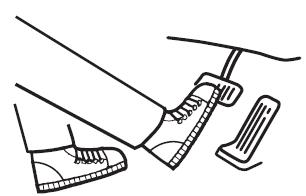
This vehicle has power-assisted brakes that adjust automatically through normal use.
Should power-assist fail, you can stop by applying greater force than normal to the brake pedal. But the distance required to stop will be greater than usual.
| WARNING
Do not coast with the engine stalled or
turned off , fi nd a safe place to stop:
Coasting with the engine stalled or
turned off is dangerous. Braking will
require more eff ort, and the brake's
power-assist could be depleted if
you pump the brake. This will cause
longer stopping distances or even an
accident.
Shift to a lower gear when going down steep hills: Driving with your foot continuously on the brake pedal or steadily applying the brakes for long distances is dangerous. This causes overheated brakes, resulting in longer stopping distances or even total brake failure. This could cause loss of vehicle control and a serious accident. Avoid continuous application of the brakes. Dry off brakes that have become wet by driving slowly, releasing the accelerator pedal and lightly applying the brakes several times until the brake performance returns to normal: Driving with wet brakes is dangerous. Increased stopping distance or the vehicle pulling to one side when braking could result in a serious accident. Light braking will indicate whether the brakes have been aff ected. |
CAUTION
|
 Brake System
...
 Parking Brake
CAUTION
Driving with the parking brake on
will cause excessive wear of the brake
parts.
NOTE
For parking in snow, refer to Winter Driving regarding parking
brake use.
Setting ...
Other materials:
Engine SST [Mzr 2.3 Disi Turbo]
1: Mazda SST number
2: Global SST number
Example
1:49 UN30 3328
2:303–328
Rear oil seal replacer
1:–
2:303–507
Crankshaft TDC timing pin
1:49 UN30 310610
2:303–1061
Camshaft
alignment timi ...
Front Seat Cover Removal/Installation [Vehicles With Power Seat System]
WARNING:
Handling a front seat (with built-in side air bag) improperly can accidentally
operate (deploy) the air bag, which may seriously injure you. Read the service
warnings before handling a front seat (with built-in side air bag)..
CAUTION:
After removing a front seat ...
Ignition Switch Removal/Installation [Without Advanced Keyless Entry And Push
Button Start System]
1. Disconnect the negative battery cable..
2. Remove the column cover..
3. Detach the tab.
4. Pull the pin in the direction of the arrow shown in the figure and release
the lock.
5. Disconnect the ignition switch connector and key interlock solenoid connector.
6. Remove the ...
