
Subaru Solterra 2023-2026 Owner's Manual: SUBARU Safety Sense
The SUBARU Safety Sense suite in the Subaru Solterra integrates a range of advanced driver assistance technologies designed to support the driver and enhance both safety and comfort during everyday driving. These intelligent systems work together to help reduce collision risk, improve awareness, and provide assistance in various traffic conditions.
WARNING
■ SUBARU Safety Sense
The SUBARU Safety Sense system in the Subaru Solterra is developed with the expectation that the driver remains attentive and responsible at all times. While the system can assist in mitigating collision impact and supporting normal driving operations, its detection capabilities and control performance are inherently limited. Therefore, drivers must not depend entirely on the system and must always maintain full awareness of their surroundings.
■ For safe use
- Avoid excessive reliance on the SUBARU Safety Sense system in the Subaru
Solterra.
The driver remains fully responsible for safe vehicle operation, including monitoring the environment and responding appropriately to road conditions. Assistance provided by the system may be limited depending on circumstances.
Relying too heavily on driver assistance features may result in dangerous situations and could lead to serious injury or accidents.
- Do not attempt to intentionally test or challenge the system, as unpredictable behavior may occur and compromise safety.
- If driver attention is required or a malfunction is detected in the Subaru Solterra, warning messages and audible alerts will be issued. Always follow the instructions shown on the display.
- External factors such as cabin noise, audio system volume, or road conditions may make it difficult to notice warning sounds or system responses in the Subaru Solterra.
■ When it is necessary to disable the system
In certain situations, it is important to temporarily deactivate the SUBARU Safety Sense system in the Subaru Solterra to ensure correct vehicle operation.
Failure to disable the system under these conditions may result in improper system behavior and increased risk of accidents.
- When the Subaru Solterra is unevenly loaded, tilted, or affected by a flat tire
- When driving at unusually high speeds
- When towing another vehicle
- When the Subaru Solterra is being transported by truck, ship, or rail
- When the vehicle is raised and the wheels are free to rotate
- During diagnostic procedures using dynamometers, speed testers, or wheel balancers
- When driving aggressively, in sporty conditions, or off-road environments
- When passing through an automatic car wash
- If sensors or surrounding components have been impacted or misaligned
- When accessories obstruct sensors or lighting elements on the Subaru Solterra
- When tire chains are installed or a temporary puncture repair kit has been used
- When tires are excessively worn or improperly inflated
- When non-approved tire sizes are installed
- When the Subaru Solterra cannot be driven stably due to damage or malfunction
Sensors used by SUBARU Safety Sense
The Subaru Solterra relies on a network of precision sensors to continuously monitor the surrounding environment and support the operation of SUBARU Safety Sense features.
■ Sensors which detect the surrounding conditions
Front
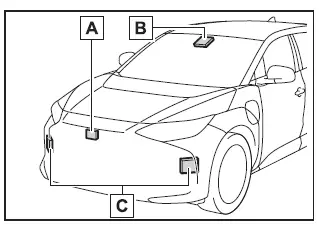
- Front radar sensor
- Front camera
- Front side radar sensors
These advanced sensing components in the Subaru Solterra work together to analyze traffic, detect obstacles, and assist with various safety functions, contributing to a more confident and controlled driving experience.
Rear (rear side radar sensors)
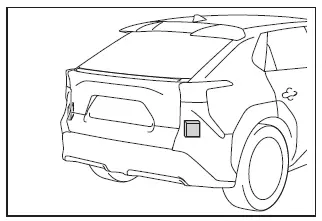
The Subaru Solterra is equipped with rear side radar sensors that continuously monitor surrounding traffic conditions, especially in adjacent lanes and blind spot areas. These sensors enhance situational awareness and support advanced safety functions by detecting vehicles approaching from behind or alongside.
■ Sensors which detect the driver condition
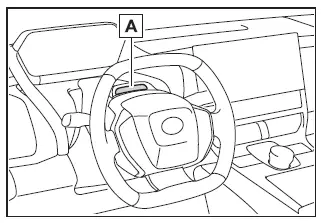
- Driver monitor camera
The driver monitoring system in the Subaru Solterra uses a dedicated camera to assess driver attention, helping detect signs of distraction or fatigue and contributing to safer driving behavior.
WARNING
■ To prevent malfunction of the radar sensors
Carefully follow the precautions below to ensure proper operation of the Subaru Solterra radar sensors.
Failure to maintain these components correctly may impair detection performance and could result in unsafe driving conditions.
- Always keep the radar sensors and their protective covers clean and free of dirt.
If the surface of a radar sensor or its cover becomes dirty, or is obstructed by water, snow, or debris, clean it gently using a soft cloth to avoid damaging the sensitive components.
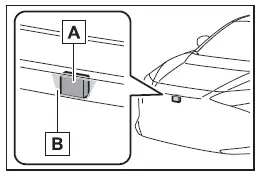
- Radar sensor
- Radar sensor cover
- Ensure that the areas surrounding the front side radar sensors on the Subaru Solterra bumper remain clean at all times.
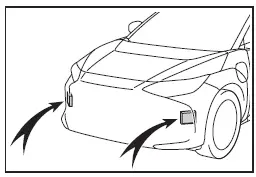
- Do not attach any accessories, decals, transparent films, or metallic materials such as aluminum tape near the radar sensors or their surrounding areas.
- Avoid exposing the radar sensors or nearby body panels of the Subaru Solterra to impacts. If any damage occurs to the front grille or bumper, have the system inspected by a SUBARU dealer.
- Do not attempt to disassemble or alter the radar sensors.
- Do not repaint or modify the radar sensors or covers, and only use genuine Subaru Solterra replacement parts when necessary.
- In the following situations, professional recalibration of the Subaru
Solterra radar sensors is required. Contact your SUBARU dealer for assistance:
- When a radar sensor has been removed, reinstalled, or replaced
- When the front bumper or grille has been replaced
■ To prevent malfunction of the front camera
Follow these guidelines to maintain proper performance of the Subaru Solterra front camera system.
Failure to do so may reduce system accuracy and increase the risk of incorrect detection.
- Always keep the windshield of the Subaru Solterra clean.
- If the windshield becomes dirty or covered with oil film, rain droplets, snow, or ice, clean it thoroughly.
- Even if a protective coating is applied, use the wipers regularly to maintain a clear viewing area for the camera.
- If the inner surface of the windshield near the camera becomes dirty, consult a SUBARU dealer for proper cleaning.
- Do not apply stickers, films, or any objects to the area of the windshield in front of the Subaru Solterra front camera.
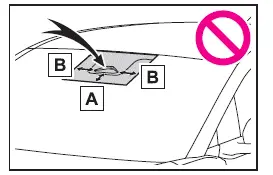
- Approximately 1.6 in. (4 cm)
- Approximately 1.6 in. (4 cm)
- If the windshield becomes fogged, iced, or covered with condensation, use the defogging system to restore visibility for the Subaru Solterra camera.
- If wipers fail to clear water effectively from the camera area, replace the wiper blades or inserts.
- Do not apply window tint to the windshield of the Subaru Solterra.
- If the windshield is cracked or damaged, replace it promptly. Camera recalibration will be required after replacement.
- Avoid spilling liquids onto the front camera assembly.
- Do not expose the Subaru Solterra front camera to strong or direct light sources.
- Protect the camera lens from dirt and scratches. When cleaning the interior windshield, ensure that cleaning agents do not contact the camera lens.
Maintaining the cleanliness and proper condition of the Subaru Solterra sensor systems ensures accurate detection, reliable driver assistance performance, and maximum safety in all driving situations.
In the Subaru Solterra, avoid touching the front camera lens at all times. If the lens becomes dirty, scratched, or otherwise damaged, consult an authorized SUBARU dealer for proper inspection and maintenance.
■ Front camera installation area on the windshield
The Subaru Solterra is equipped with a system that can automatically activate the windshield heater near the front camera when fogging is detected, helping maintain optimal visibility for sensor operation.
After using the defogging function, avoid touching the heated area until it has cooled down sufficiently, as it may be hot and could cause minor burns.
■ Precautions for the driver monitor camera
Follow the precautions below to ensure proper operation of the Subaru Solterra driver monitoring system.
Ignoring these guidelines may result in reduced detection accuracy and could compromise safety.
- Do not expose the driver monitor camera or surrounding components in the Subaru Solterra to strong impacts.
If the camera is subjected to impact, it may shift out of alignment, preventing accurate driver detection. In such cases, have the Subaru Solterra inspected by a SUBARU dealer.
- Do not disassemble or modify the driver monitor camera.
- Avoid attaching any accessories, films, or stickers to the camera or its surrounding area.
- Prevent moisture or liquids from coming into contact with the Subaru Solterra driver monitor camera.
- Do not obstruct the camera or place objects in front of it.
- Protect the lens from scratches or physical damage.
- Do not touch the camera lens directly or allow dirt to accumulate on its surface.
If fingerprints or dirt appear on the lens, gently clean it using a dry, soft cloth to avoid scratches or marks.
- Do not use cleaning agents, detergents, or solvents that may damage the plastic lens surface.
■ Precautions for use
For Subaru Solterra models equipped with Connected Navigation, an active SUBARU connected services subscription is required to access certain advanced functions.
For more information, contact your SUBARU dealer.
- LCA (Lane Change Assist)
- Radar Cruise Control: Extended resume time
- Traffic Jam Assist
■ Situations in which the sensors may not operate properly
- When the Subaru Solterra ride height or inclination has been altered due to modifications or uneven loading
- When the windshield is dirty, fogged, cracked, or otherwise damaged
- When ambient temperatures are extremely high or low
- When mud, snow, water, insects, or debris cover the sensors
- During severe weather conditions such as heavy rain, fog, snow, or sandstorms
- When water spray, dust, or smoke reduces visibility in front of the Subaru Solterra
- When driving in darkness without headlights, such as in tunnels or at night
- When headlight lenses are dirty, dim, or malfunctioning
- When headlights are improperly aligned
- When intense light sources, including sunlight or reflections, shine directly into the front camera
- When ambient lighting conditions change rapidly
- When driving near strong electromagnetic sources such as broadcast towers or power stations
- When the windshield wiper obstructs the camera’s view
- When driving near highly reflective environments, such as:
- Tunnels
- Steel bridges
- Gravel or uneven roads
- Snow-covered or rutted surfaces
- Concrete walls
- Large vehicles such as trucks
- Metallic road elements like manhole covers or guardrails
- When encountering road edges, bumps, or protrusions
- When detecting small or narrow vehicles such as compact mobility devices
- When detecting vehicles with minimal visible surface area, such as empty trucks
- When detecting vehicles with low profiles, such as flatbed trailers
Proper care and awareness of these limitations in the Subaru Solterra help ensure that all sensor-based safety systems function reliably and deliver maximum performance under real-world driving conditions.
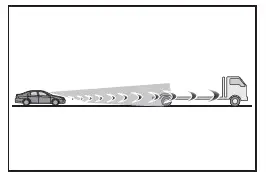
- In the Subaru Solterra, detection performance may be reduced when the vehicle ahead has unusually high ground clearance, making it more difficult for sensors to accurately recognize its position.
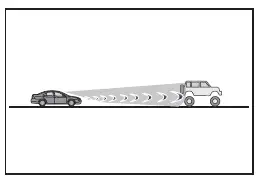
- When a detected vehicle is carrying cargo that extends beyond its body, the Subaru Solterra sensors may have difficulty correctly identifying its shape and distance.
- Vehicles with minimal exposed metal surfaces, such as those partially covered with fabric or special materials, may not be easily detected by Subaru Solterra radar systems.
- Irregularly shaped vehicles, including tractors, trailers with side attachments, or specialty equipment, can reduce detection accuracy.
- When the Subaru Solterra is extremely close to another vehicle, system response time and detection precision may be limited.
- Vehicles positioned at unusual angles relative to the Subaru Solterra may not be recognized consistently.
- Detection may be impaired if another vehicle is covered with mud, snow, or debris.
- Driving conditions such as the following may negatively affect system performance
in the Subaru Solterra:
- Sharp curves or winding roads
- Sudden elevation changes, including steep inclines or declines
- Roads sloped sideways
- Deep ruts or uneven terrain
- Unpaved or poorly maintained surfaces
- Roads with frequent bumps or undulations
- Frequent or abrupt steering inputs in the Subaru Solterra may reduce system stability and detection consistency.
- When the vehicle is not centered within its lane, system accuracy may decrease.
- Performance may vary when system components, including brakes, are extremely cold, overheated, or wet.
- Improper wheel alignment can affect Subaru Solterra sensor calculations and system effectiveness.
- Driving on low-traction surfaces such as ice, snow, or loose gravel may reduce the effectiveness of assistance systems.
- When the Subaru Solterra trajectory does not match the curvature of the road, system predictions may become less accurate.
- Entering a curve at excessive speed may limit the ability of the system to respond appropriately.
- Driving into or out of confined spaces such as parking garages, car elevators, or narrow lots may affect detection.
- Low-speed maneuvering in parking areas may not fully utilize system capabilities.
- Obstacles such as tall grass, branches, or hanging materials may interfere with Subaru Solterra sensors.
- Strong crosswinds may also influence system behavior and detection stability.
■ Situations in which the lane may not be detected
- When lane markings are unusually wide or narrow, the Subaru Solterra may have difficulty identifying them correctly.
- Immediately after a lane change or when passing through intersections, lane detection may be temporarily unstable.
- Temporary or construction-related lane markings may not be recognized accurately.
- Surrounding objects such as shadows, road patterns, or structures that resemble lane markings may confuse the Subaru Solterra detection system.
- Multiple overlapping lane markings may reduce clarity for the system.
- Faded, unclear, or wet lane markings may not be detected reliably.
- Lane markings located near curbs may be misinterpreted.
- Highly reflective road surfaces, such as concrete, may affect Subaru Solterra camera performance.
■ Situations in which some or all of the functions of the system cannot operate
- If a malfunction is detected in the Subaru Solterra Safety Sense system or related components such as braking or steering systems, certain functions may be disabled.
- When stability systems such as VSC (Vehicle Stability Control) or TRAC (Traction Control) are actively operating, system behavior may be limited.
- If VSC, TRAC, or other safety systems are turned off, Subaru Solterra driver assistance functions may not operate as intended.
Understanding these limitations of the Subaru Solterra Safety Sense system allows drivers to use advanced assistance features more effectively while maintaining full awareness and control in all driving conditions.
■ Changes in brake operation sound and pedal response
- During normal braking in the Subaru Solterra, you may notice variations in brake sound or a change in pedal feel. These characteristics are typical of the advanced braking and energy recovery systems and do not indicate a malfunction.
- While the system is active, the brake pedal in the Subaru Solterra may feel firmer than expected or may momentarily travel further downward. In all cases, braking performance remains effective—simply continue to press the pedal as needed to achieve the desired stopping force.
These sensations are part of the integrated braking control in the Subaru Solterra, where regenerative and friction braking are combined to optimize efficiency and safety.
■ Situations in which the driver monitor may not operate properly
Under certain conditions, the driver monitoring camera in the Subaru Solterra may have difficulty detecting the driver’s face accurately. When this occurs, some functions may be limited or may not operate as intended.
- When the interior of the Subaru Solterra becomes excessively hot, such as after prolonged exposure to direct sunlight
- When strong light sources, including sunlight or headlights from following vehicles, shine directly into the driver monitoring camera
- When lighting conditions inside the Subaru Solterra change rapidly due to shadows from buildings, trees, or other structures
- When intense light, such as sunlight or oncoming headlights, is directed toward the driver’s face
- When reflections from eyeglasses or sunglasses interfere with camera visibility
- When multiple faces are within the camera’s detection area, such as when passengers lean toward the driver’s seat
- When the driver’s face is partially or fully outside the detection zone, for example when leaning forward or extending outside the window
- When the Subaru Solterra driver monitoring camera is obstructed by the steering wheel, hands, arms, or other objects
- When the driver is wearing a hat that casts shadows over the face
- When the driver is wearing an eyepatch
- When eyeglasses or sunglasses worn by the driver do not allow sufficient infrared transmission
- When the driver is wearing contact lenses that alter eye visibility
- When a face mask is worn, partially covering key facial features
- When facial expressions, such as laughter or partially closed eyes, reduce recognition accuracy
- When critical facial features such as eyes, nose, or mouth are obscured
- When makeup or accessories affect the recognition of facial structure
- When hair, eyewear frames, or other objects block the driver’s eyes
- When devices emitting near-infrared light are present inside the Subaru Solterra, such as non-genuine monitoring equipment
Maintaining clear visibility of the driver’s face and minimizing obstructions helps ensure optimal performance of the Subaru Solterra driver monitoring system and contributes to safer driving conditions.
 SUBARU Safety Sense software update
To access and fully utilize these advanced features in the Subaru
Solterra, an active connected services subscription provided by SUBARU is required.
For complete details regarding activation, ava ...
 Driver monitor
Basic functions
In the Subaru Solterra, the driver monitoring system continuously observes the
driver during operation using an advanced in-cabin camera. It analyzes the driver’s
head position, ...
Other materials:
Liftgate Hinge Removal/Installation
1. Disconnect the negative battery cable..
2. Remove the following parts:
a. Rear scuff plate.
b. Rear seat cushion.
c. Rear seat back.
d. Lower anchor installation bolts on the rear seat belt.
e. Tire house trim.
f. Trunk end trim.
g. Trunk side upper trim.
h. Trunk side trim.
i ...
Direct Mode
Direct mode can be used for temporarily
switching gears by operating the steering
shift switch while the vehicle is being
driven with the selector lever in the D
range.
While in direct mode, the D and M
indication illuminate and the gear position
in use is illuminated.
Direct mode is can ...
Clock Switch Inspection
NOTE:
Clock switch built with the hazard warning switch.
1. Disconnect the negative battery cable..
2. Remove the clock switch..
3. Verify resistance between the clock switch terminals.
If the resistance is not as specified, replace the clock switch.
Between t ...
